How to Choose Vegetables for Bag Growing
Not all vegetables are equally suited to container gardening in plastic bags. The most reliable choices are varieties that have a compact root structure, a moderate water requirement, and a growth habit that fits within the space provided by a standard grow bag.
The sections below group vegetables by type, with notes on bag size, light requirements, and typical time from planting to first harvest.
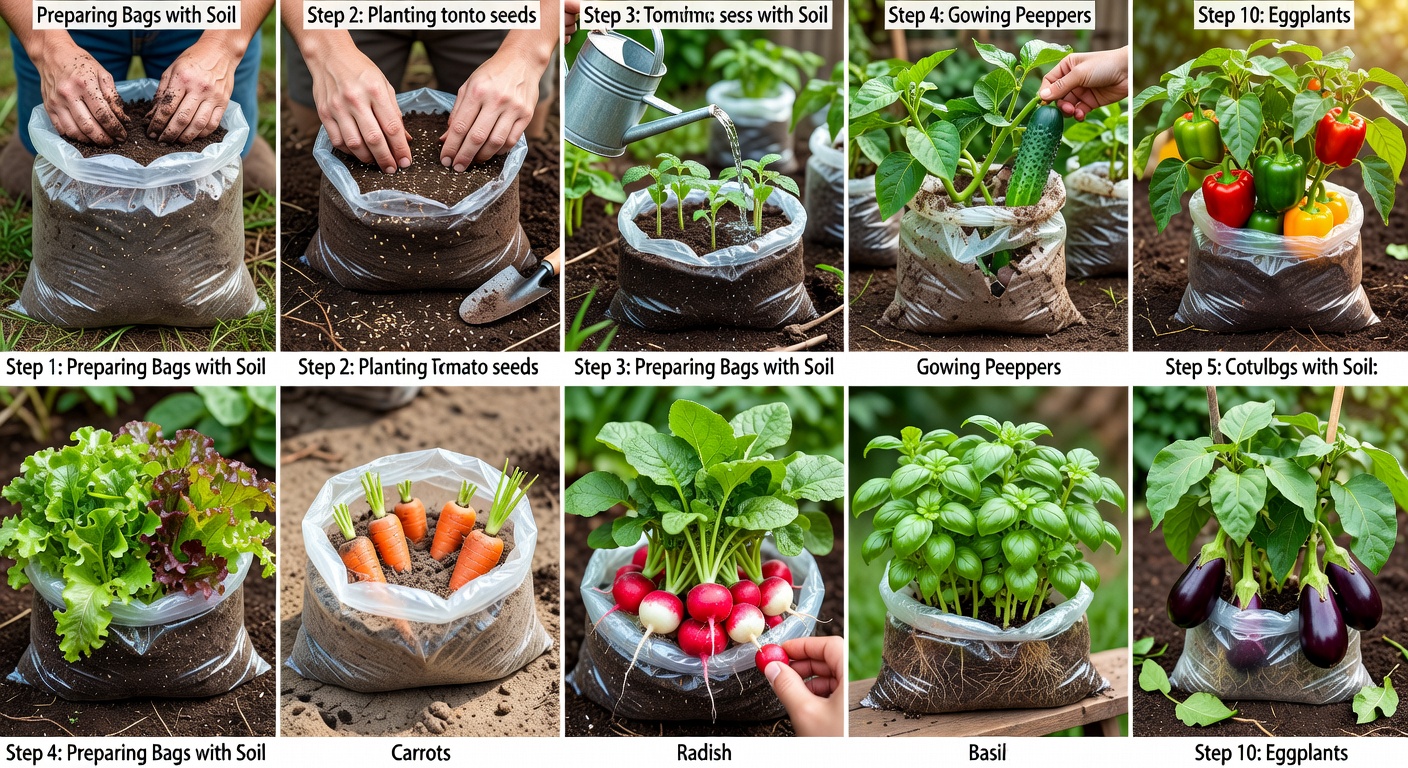
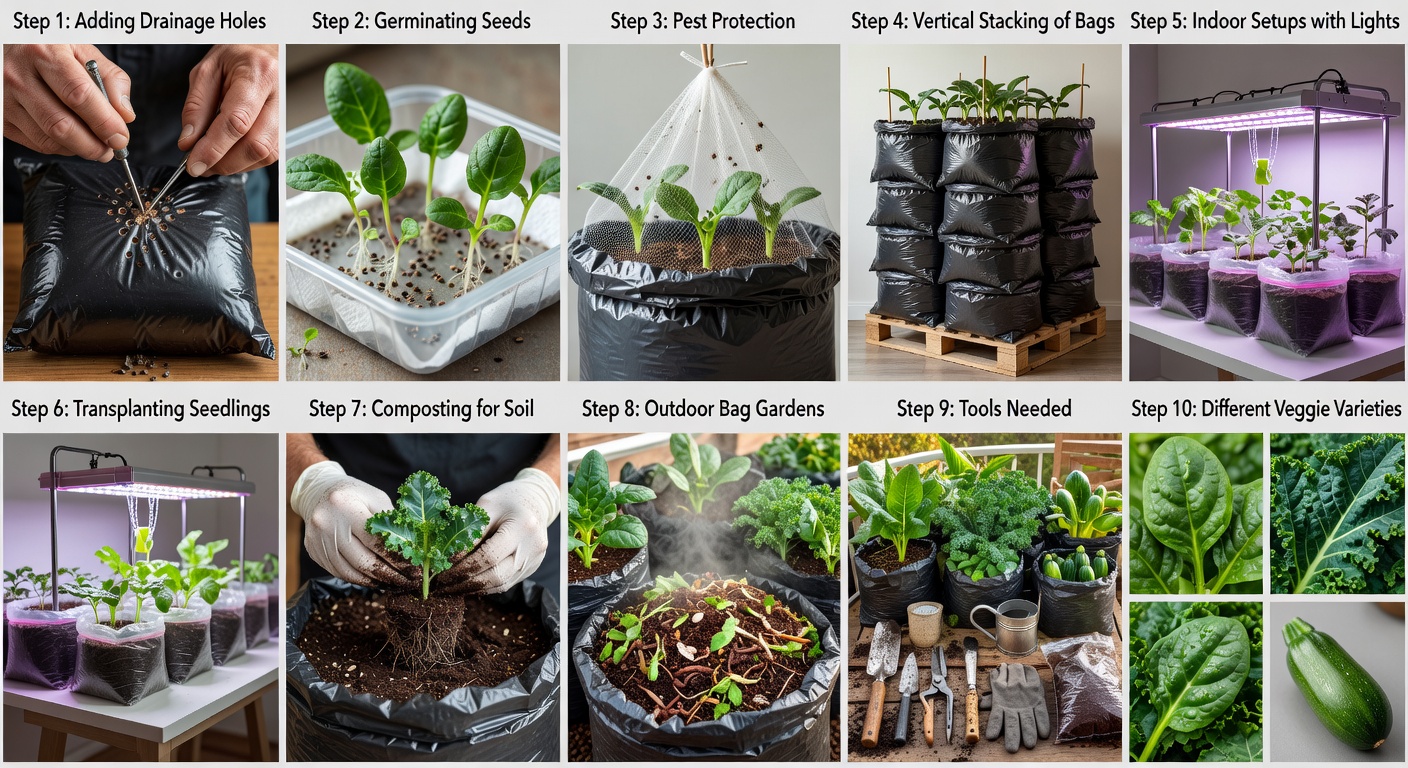
Leafy Greens
Leafy greens are among the most practical choices for bag gardening. They grow quickly, tolerate partial shade, and can be harvested in stages — allowing the same plant to produce over several weeks.
| Vegetable | Bag Size | Sun | Days to Harvest |
|---|---|---|---|
| Lettuce (loose-leaf) | 15 L | 4–6 hours | 30–45 days |
| Spinach | 15 L | 4–6 hours | 40–50 days |
| Kale | 20 L | 5–6 hours | 55–70 days |
| Bok choy / Pak choi | 15 L | 4–6 hours | 35–50 days |
| Swiss chard | 20 L | 5–7 hours | 50–60 days |
Sow new lettuce or spinach seeds every two to three weeks to maintain a continuous supply rather than a single large harvest.
Fruiting Vegetables
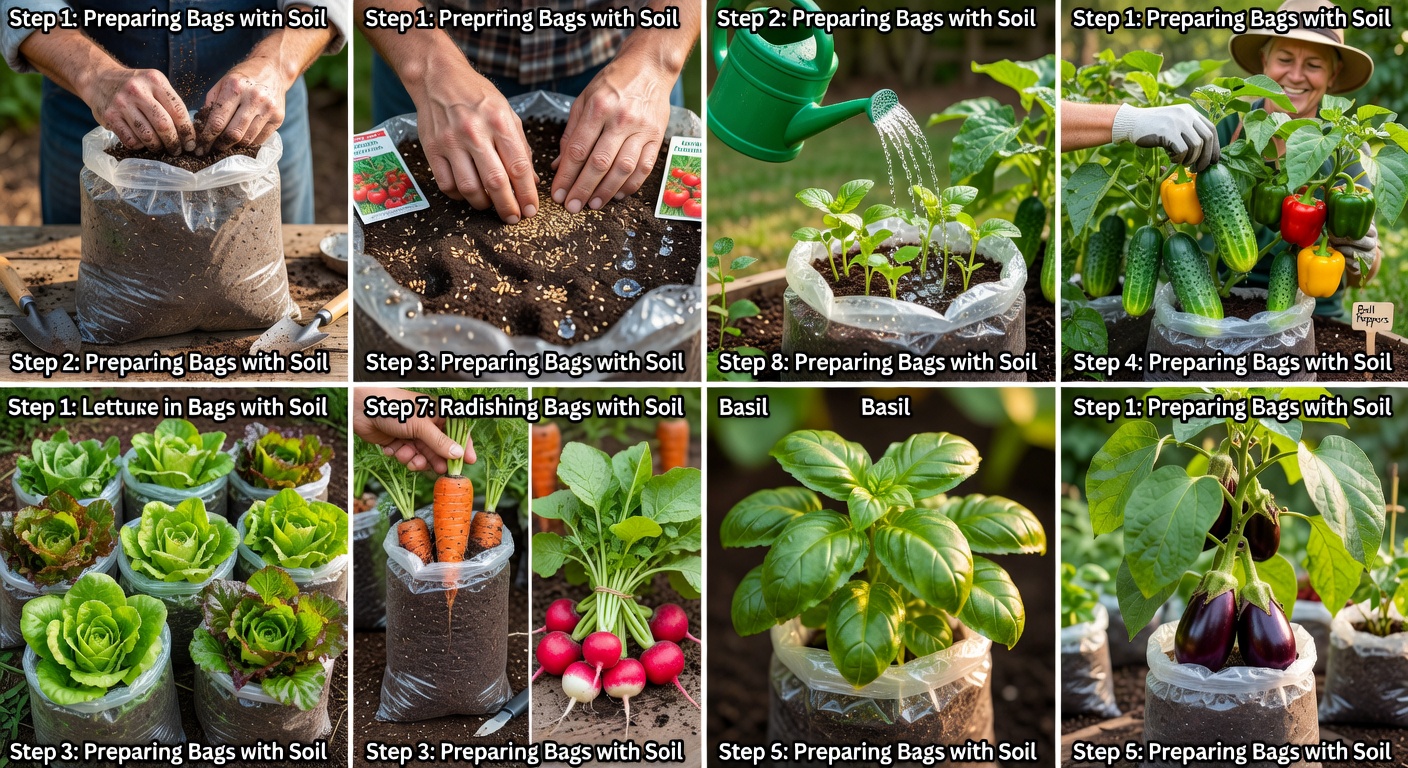
Fruiting vegetables — those that produce an edible fruit — generally require more space, more sunlight, and more nutrients than leafy greens. They are well-suited to larger bags placed in locations that receive full sun for most of the day.
| Vegetable | Bag Size | Sun | Days to Harvest |
|---|---|---|---|
| Tomato (compact/dwarf) | 20–30 L | 6–8 hours | 60–80 days |
| Pepper (bell or chilli) | 20–25 L | 6–8 hours | 70–90 days |
| Eggplant / Aubergine | 25–30 L | 6–8 hours | 70–85 days |
| Cucumber (bush type) | 20–25 L | 6–8 hours | 50–65 days |
| Zucchini / Courgette | 25–30 L | 6–8 hours | 50–60 days |
Root Vegetables
Root vegetables can be grown in bags provided the bag is deep enough for the roots to develop without restriction. Shallow-rooted varieties such as radishes and short-variety carrots are the most practical options.
| Vegetable | Bag Depth | Sun | Days to Harvest |
|---|---|---|---|
| Radish | 20 cm minimum | 4–6 hours | 22–30 days |
| Carrot (short variety) | 30 cm minimum | 5–7 hours | 60–80 days |
| Beetroot | 25 cm minimum | 5–7 hours | 55–70 days |
| Spring onion / Scallion | 15 cm minimum | 4–6 hours | 60–80 days |
Herbs
Many culinary herbs are compact and well-adapted to bag growing. They generally require less soil volume than vegetables and can be placed on windowsills or small outdoor ledges.
- Basil: Warm temperatures, full sun, harvest frequently to prevent flowering
- Parsley: Tolerates partial shade, slow to establish from seed
- Chives: Hardy and low-maintenance, suitable for 10–15 L bags
- Coriander / Cilantro: Prefers cooler temperatures; bolts quickly in heat
- Mint: Grows vigorously — keep in its own bag to prevent spreading
When purchasing seeds or seedlings, look for descriptions such as "compact", "dwarf", "bush type", or "container variety". These cultivars are specifically developed for smaller growing environments and generally perform better in bags than standard field varieties.
Vegetables to Avoid in Bags
Some vegetables are not well-suited to bag growing due to their size, deep root systems, or space requirements. These include:
- Corn / Maize — requires large open space and wind pollination
- Standard pumpkins or large squash — vines and fruit size are too large
- Asparagus — perennial; needs permanent in-ground installation
- Artichoke — large plant size unsuitable for typical bag volumes
- Long-variety carrots — require more soil depth than bags usually allow
For next steps on planting and sowing, see the Seed to Harvest guide. For information on soil preparation, visit the Soil & Nutrients page.